Imagine that you are in a vehicle, going fast towards an immovable barrier.
What do you do?
Press the accelerator harder?
Or slam on the emergency brake?
It’s a choice.
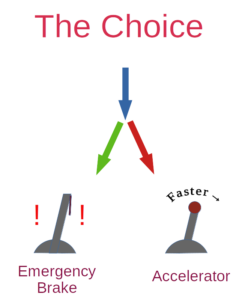
In a profound ecological and climate crisis, immediate measures are necessary, including substantial reductions in energy and material consumption, with rapid reduction in carbon emissions, alongside a safety net for affected individuals. Yet, with their vacuous mantra of “growth growth growth”, the vast majority of political leaders try to push down hard on the accelerator pedal.
The Emergency Brake is a emergency response to stop the damage and address head-on the climate-ecological crisis. That means a real reduction in energy and material use, setting annual limits on fossil fuel usage, strict caps on imports reliant on fossil fuels, extensive building renovations for energy efficiency, halting most construction on green spaces, and transforming transport towards low-carbon options. It will affect us all, so we include an emergency safety net. In our full report, we explore the idea, with indicative targets for each element.
Should the emergency brake actions and/or worsening eco-geopolitical conditions lead to threats to livelihoods, then emergency measures will have to be put in place to protect citizens. For a full discussion of the emergency brake, see pages 6-10 of the full report.